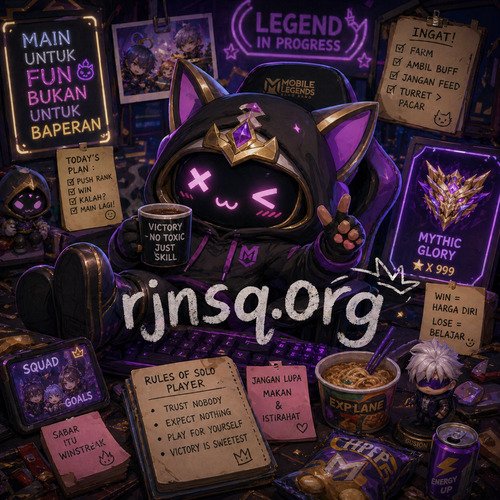
rjnsq.org – Mobile Legends has become one of the most popular multiplayer online battle arena (MOBA) games in the world. With millions of active players competing every day, the game offers a fast-paced experience that combines strategy, teamwork, mechanical skill, and decision-making. Unlike many competitive games that require long match durations, Mobile Legends delivers intense action in relatively short matches, making it attractive to both casual players and serious competitors.
Success in Mobile Legends is not determined solely by mechanical ability or how quickly a player can tap skills. Understanding map control, hero roles, objective prioritization, team composition, and positioning often plays a much bigger role in deciding the outcome of a match. Players who consistently perform well usually possess a deeper understanding of the game’s systems and know how to adapt to changing situations.
Whether someone is completely new to the game or aiming to climb the ranked ladder, learning the fundamentals remains essential. A strong foundation allows players to make better decisions, contribute more effectively to their team, and increase their chances of securing victories even in difficult matches.
Understanding the Core Gameplay of Mobile Legends
The primary objective in Mobile Legends is not collecting the highest number of kills. Instead, the goal is to destroy the enemy base while protecting your own. Many beginners become overly focused on chasing opponents across the map, often neglecting important objectives such as turrets, Turtle, Lord, and lane pressure.
Turrets serve as defensive structures that protect the path toward the enemy base. Destroying these structures gradually opens the map and creates opportunities for deeper invasions. A team that secures multiple turrets gains better vision control and more freedom to rotate between lanes.
Objectives such as Turtle and Lord are equally important. The Turtle provides valuable gold and experience advantages for the entire team, helping players reach important item milestones more quickly. The Lord becomes increasingly significant in the late game because it pushes lanes and forces enemies to respond, creating opportunities for decisive team fights.
Understanding that objectives outweigh kills helps players develop a winning mindset. A team with fewer kills can still dominate a match if they consistently secure map objectives and maintain lane pressure.
Understanding Hero Roles and Their Responsibilities
Every hero in Mobile Legends belongs to one or more categories that define their primary function within a team. Learning these roles is crucial because each one contributes differently to overall success.
Tanks are responsible for initiating fights, absorbing damage, and protecting vulnerable teammates. Their durability allows them to engage enemies safely and create opportunities for carries to deal damage. Effective tank players focus on vision, positioning, and crowd control rather than chasing kills.
Fighters operate between tanks and damage dealers. They possess a balance of offense and defense, allowing them to sustain prolonged engagements. Fighters often excel in side lanes and can become major threats during mid-game skirmishes.
Assassins specialize in eliminating high-priority targets. Their mobility and burst damage make them dangerous against marksmen and mages. However, assassins typically require precise timing because entering a fight too early can result in quick elimination.
Mages provide magical damage and crowd control. They often influence team fights with area-of-effect abilities that can disrupt enemy formations. Proper positioning is especially important for mage players because they are usually vulnerable to sudden attacks.
Marksmen are primary damage dealers during the late game. They scale significantly with items and can rapidly destroy both enemies and objectives. Protecting the marksman often becomes a major priority as matches progress.
Supports focus on healing, shielding, crowd control, and utility. Their impact may not always appear on the scoreboard, but effective support players frequently determine whether their team survives crucial engagements.
Mastering the Importance of the Laning Phase
The laning phase sets the foundation for the rest of the match. During this period, players earn gold and experience by defeating minions and contesting resources.
Many inexperienced players constantly engage in unnecessary fights during the opening minutes. While aggressive play can sometimes generate advantages, poor decisions often lead to avoidable deaths that put the entire team behind.
A strong laning phase involves maintaining consistent farm, avoiding risky engagements, and observing enemy movements. Players should focus on last-hitting minions when possible and rotating efficiently when opportunities arise.
Wave management is another important skill. Clearing minion waves quickly before rotating allows players to support teammates without sacrificing valuable resources. Teams that manage lanes effectively often gain superior map control and create pressure across multiple areas simultaneously.
Essential Strategies for Improving Your Gameplay
Map awareness separates average players from highly skilled competitors. Constantly monitoring the minimap provides information about enemy positions, missing heroes, and potential threats.
Players who rarely glance at the minimap often become easy targets for ambushes. Conversely, players who maintain awareness can predict enemy movements and react accordingly.
For example, if multiple opponents disappear from the map, there is a strong possibility that they are preparing a gank. Recognizing these patterns allows players to retreat before danger arrives.
Map awareness also helps identify opportunities. Seeing enemies concentrated in one area may reveal an undefended lane or objective elsewhere. Taking advantage of such situations often creates significant advantages without requiring direct combat.
Improving this skill requires consistent practice. Experienced players frequently check the minimap every few seconds while farming, fighting, or rotating between objectives.
Positioning Correctly During Team Fights
Team fights are among the most important moments in Mobile Legends. Even a single engagement can determine the outcome of an entire match.
Positioning plays a critical role during these encounters. Tanks should generally occupy the front line, absorbing damage and initiating engagements. Damage dealers must remain at safe distances while continuously attacking priority targets.
Marksmen who position too aggressively often become immediate targets for assassins and fighters. Similarly, mages who stand too close to the front line risk being eliminated before contributing meaningful damage.
Good positioning also involves understanding terrain. Bushes, walls, and chokepoints can provide strategic advantages during battles. Players who utilize environmental features effectively can surprise opponents or avoid dangerous situations.
Maintaining proper spacing between teammates further reduces vulnerability to area-of-effect abilities. Clustering together may allow enemy heroes to disable multiple targets simultaneously, dramatically increasing their impact.
Learning When to Fight and When to Retreat
One of the most overlooked skills in Mobile Legends is knowing when not to fight. Many matches are lost because players engage in battles despite unfavorable conditions.
Before committing to a fight, players should consider several factors. These include team numbers, ultimate availability, item differences, and positioning. Engaging while outnumbered or without key abilities often results in disaster.
Retreating is not a sign of weakness. Strategic withdrawals preserve resources, prevent unnecessary deaths, and create opportunities for future engagements under better circumstances.
Patience frequently produces better outcomes than reckless aggression. Waiting for cooldowns, regrouping with teammates, or allowing a split-pushing ally to create pressure elsewhere can significantly improve the chances of success.
Experienced players recognize that every fight carries risk. By evaluating situations carefully, they maximize favorable engagements while minimizing unnecessary losses.
Building Heroes According to the Situation
Many players simply copy item builds without understanding why those items are selected. While recommended builds can provide a useful starting point, adapting to specific situations often yields superior results.
If the enemy team possesses heavy physical damage, defensive armor items may become necessary. Against magic-heavy compositions, magic resistance can dramatically improve survivability.
Offensive choices should also reflect the current match. Sometimes maximizing burst damage is ideal, while other situations may require sustained damage or penetration.
Understanding item interactions allows players to customize builds based on enemy threats and team needs. This flexibility often provides an advantage over opponents who rely exclusively on preset recommendations.
As players gain experience, they begin recognizing patterns that influence item decisions. Developing this knowledge significantly improves performance across different heroes and scenarios.
Communicating Effectively With Teammates
Communication remains one of the most powerful tools available in Mobile Legends. Even simple signals can coordinate actions and improve team efficiency.
The game’s ping system allows players to indicate objectives, warn of danger, and request assistance. Using these tools consistently helps maintain awareness among teammates.
Constructive communication is especially important during ranked matches. Rather than criticizing mistakes, effective players focus on providing useful information and coordinating future actions.
Positive communication often improves team morale, reducing the likelihood of frustration and poor decision-making. Teams that remain focused and cooperative typically perform better than groups distracted by arguments.
Leadership can emerge from any role. Players who communicate clearly and make informed calls frequently help guide their team toward victory.
Understanding Power Spikes and Timing
Every hero experiences power spikes at different stages of a match. Recognizing these moments allows players to maximize their effectiveness.
Some heroes become strong after acquiring a specific item. Others rely on reaching certain levels or unlocking key abilities. Understanding these milestones helps players determine when to play aggressively and when to remain cautious.
For example, a marksman may require several core items before reaching peak damage output. During the early game, avoiding unnecessary risks is often preferable. Once the necessary equipment is obtained, that same hero can become a dominant force in team fights.
Timing also influences objective control. Securing Turtle immediately after winning a skirmish or summoning Lord when multiple enemies are eliminated can create overwhelming pressure.
Players who understand timing frequently make smarter decisions because they recognize windows of opportunity that others may overlook.
Reviewing Matches and Identifying Mistakes
Improvement rarely occurs without reflection. Reviewing previous matches helps players identify weaknesses and develop solutions.
Many defeats contain valuable lessons. Perhaps a player consistently overextended without vision, mismanaged resources, or positioned poorly during team fights. Recognizing these patterns creates opportunities for growth.
Instead of focusing exclusively on teammates’ mistakes, successful players analyze their own decisions. This mindset accelerates improvement because it concentrates on factors within personal control.
Even victories can reveal areas for development. Winning does not necessarily mean every decision was optimal. Evaluating both successful and unsuccessful matches provides a more complete understanding of gameplay.
Continuous learning remains one of the most important characteristics of high-level competitors. The game evolves constantly through balance changes, new heroes, and shifting strategies. Players who adapt effectively maintain long-term success.
Conclusion Mastering Mobile Legends: A Complete Guide to Playing Smarter and Winning More Matches
Mobile Legends is much more than a game of quick reflexes and flashy plays. True mastery comes from understanding objectives, managing resources, maintaining map awareness, positioning effectively, and working together as a team. While mechanical skill certainly contributes to success, strategic decision-making often determines which team ultimately destroys the enemy base.
Players who focus on improving their understanding of hero roles, lane management, objective control, and communication will steadily become more consistent performers. Learning when to engage, when to retreat, and how to adapt builds according to different situations further enhances overall effectiveness.
Climbing the ranked ladder requires patience, practice, and a willingness to learn from mistakes. Every match offers new experiences and opportunities to refine skills. By mastering the fundamentals and applying advanced strategies intelligently, players can dramatically increase their chances of victory and enjoy a more rewarding Mobile Legends experience.